


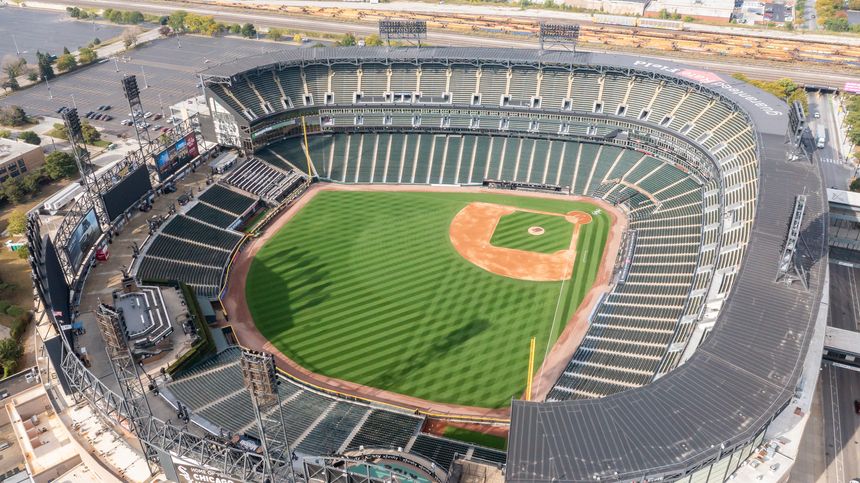
Congratulations to the 2025 World Series Champions, the Los Angeles Dodgers. Their dramatic Game 7 win over the Toronto Blue Jays completed their quest for the rare baseball accomplishment of back-to-back championships. One can assume that their 2026 goal will be a three‑peat.
Viewing this from the traditional labor law perspective, the question is whether 2025 will be the penultimate World Series? The collective bargaining agreement (CBA) between Major League Baseball (MLB) and the Major League Baseball Players Association (MLBPA) will expire after the 2026 World Series. A CBA is the foundation of the employer-employee relationship in unionized workplaces. When it expires, so may labor peace. There is speculation that the issue of a salary cap is likely to be a major source of contention during the negotiations. Some of that speculation may be based on the concern of other owners that the Dodgers’ consecutive World Series Championships increases the need to impose a salary cap. MLB (representing the team owners) wants to limit the amount of money that each team can spend on player salaries. The MLBPA does not want any restrictions on the salaries that can be paid to their members.
One of MLB’s main arguments in favor of a salary cap is the huge disparity in revenue generated by the teams. Large-market teams such as New York, Los Angeles, Boston, and Chicago are capable of generating significantly more revenue than small-market teams such as Tampa Bay, Pittsburgh, Kansas City, and Minnesota. For example, the Dodgers' broadcast and other revenue enables them to have contracts with their four starting pitchers, all of whom pitched in the Game 7 win, totaling approximately $1.3 billion. The MLBPA will counter that argument by stating that “intelligent spending” is more important than the total amount of money a team can spend.
Another MLB argument is that it is the only large professional sports league that does not have a salary cap. The National Football League, the National Hockey League, and the National Basketball Association have negotiated salary caps in their respective CBAs with their players. The historical strength of the MLBPA has allowed it to successfully oppose a salary cap for decades. Both strikes and lockouts are lawful under the National Labor Relations Act when done for legitimate bargaining purposes. The MLBPA strike in 1994, which caused the cancellation of 935 games, including the 1994 World Series, centered around the owners' push for a salary cap and changes to revenue sharing. Unfortunately, that strike caused MLB and the players to suffer substantial losses from both a financial and fan reputation perspective.
As management labor lawyers and baseball fans, we are very concerned that these irreconcilable positions may result in a work stoppage significantly and negatively impacting the 2027 season. For fans, the "next era" of baseball could begin under a cloud of labor uncertainty. To cite a famous baseball quote: “Say it ain’t so, Joe”…
/Passle/68b577fd8118878331f0b95e/SearchServiceImages/2026-03-06-14-39-49-609-69aae735e5114c7e5295935c.jpg)
/Passle/68b577fd8118878331f0b95e/MediaLibrary/Images/2026-02-05-19-03-42-414-6984e98ed522dbbaed5f8c68.jpg)
/Passle/68b577fd8118878331f0b95e/SearchServiceImages/2025-12-29-14-30-37-025-6952908dad04586c3adaa04c.png)
/Passle/68b577fd8118878331f0b95e/SearchServiceImages/2025-12-15-21-00-50-123-69407702986c138eb56d0442.jpg)